Every beautiful piece of furniture has a story. Sometimes, that story begins with a simple idea: a dining table that brings the family together, a coffee table that perfectly complements a living room, or a custom cabinet designed to fit an awkward space.
But turning that idea into something you can see, touch and use every day takes more than choosing a design and cutting timber. It requires thoughtful planning, creative collaboration, skilled craftsmanship and a genuine understanding of how furniture fits into people's lives.
That's what makes bespoke furniture so special.
Unlike mass-produced furniture, which is manufactured in standard sizes and designs, bespoke furniture is created around your individual needs. Every detail, from the dimensions and timber selection to the finishing touches, is considered with a particular purpose in mind.
At Marshall Wood, a Perth-based custom furniture studio founded by designer and craftsman Jake Sawyer, this personal approach is central to the creative process. Each commission brings together the client's vision and the maker's experience to create furniture that feels distinctive, functional and timeless.
So, what actually happens between the first conversation and the moment your finished furniture arrives?
Let's explore the journey of a bespoke furniture piece, from concept to completion.
1. Initial Consultation: Where Every Great Design Begins
The journey begins long before a piece of timber reaches the workshop.
It starts with a conversation.
Perhaps you've been searching for the perfect dining table but can't find one with the right proportions. Maybe you're renovating your home and want a statement piece that complements the new interior. Or perhaps you have a clear vision for a custom furniture design but aren't sure how to bring it to life.
Whatever the starting point, the initial consultation provides an opportunity to explore your ideas and understand what's possible.
Understanding Your Vision
The first step in creating bespoke furniture is understanding what you want to achieve.
This involves more than discussing colours, shapes or furniture styles. It's about understanding how you live, how you use your space and what matters most to you.
For example, a dining table for a busy family needs to be practical, comfortable and durable. A custom desk for a home office may require particular dimensions, storage options or cable management. Meanwhile, a statement coffee table might focus on sculptural design and the natural beauty of timber.
During the consultation, conversations may cover:
The type of furniture you're looking to create.
Your preferred style, materials and finishes.
The dimensions and layout of the intended space.
How the furniture will be used.
Your approximate budget and preferred timeframe.
Any existing furniture or architectural features the new piece should complement.
You don't need to arrive with detailed drawings or technical knowledge. Even a rough sketch, a few reference images or a description of what you have in mind can provide a useful starting point.
Finding the Balance Between Beauty and Function
One of the most important parts of the consultation is finding the right balance between appearance and practicality.
A beautifully designed dining table still needs to offer comfortable seating. A bedside cabinet must provide convenient storage without overwhelming the room. A hallway console should suit the available space while remaining useful.
Working directly with an experienced furniture maker allows these considerations to be explored before construction begins.
At Marshall Wood, the consultation is part of a collaborative process, giving clients an opportunity to contribute their ideas while benefiting from professional design knowledge.
The goal isn't simply to make something different. It's to create something that feels right for you.
2. Design Development: Turning Ideas Into Reality
Once the initial ideas have been discussed, the next stage is transforming them into a practical furniture design.
This is where creativity meets careful planning.
The design development stage helps establish how the furniture will look, how it will function and how it can be constructed to achieve the desired result.
Exploring Shapes, Proportions and Details
A furniture design may begin with a simple concept, but numerous details need to be considered before it is ready for production.
For a custom dining table, this could involve deciding on the tabletop shape, leg positioning, edge profile and overall proportions.
For a bespoke sideboard, the discussion might focus on drawer arrangements, cabinet doors, shelving and how the piece will sit against a wall.
Even small adjustments can make a significant difference.
Changing the angle of a table leg, softening an edge or adjusting the height of a cabinet can influence both the appearance and everyday usability of the finished furniture.
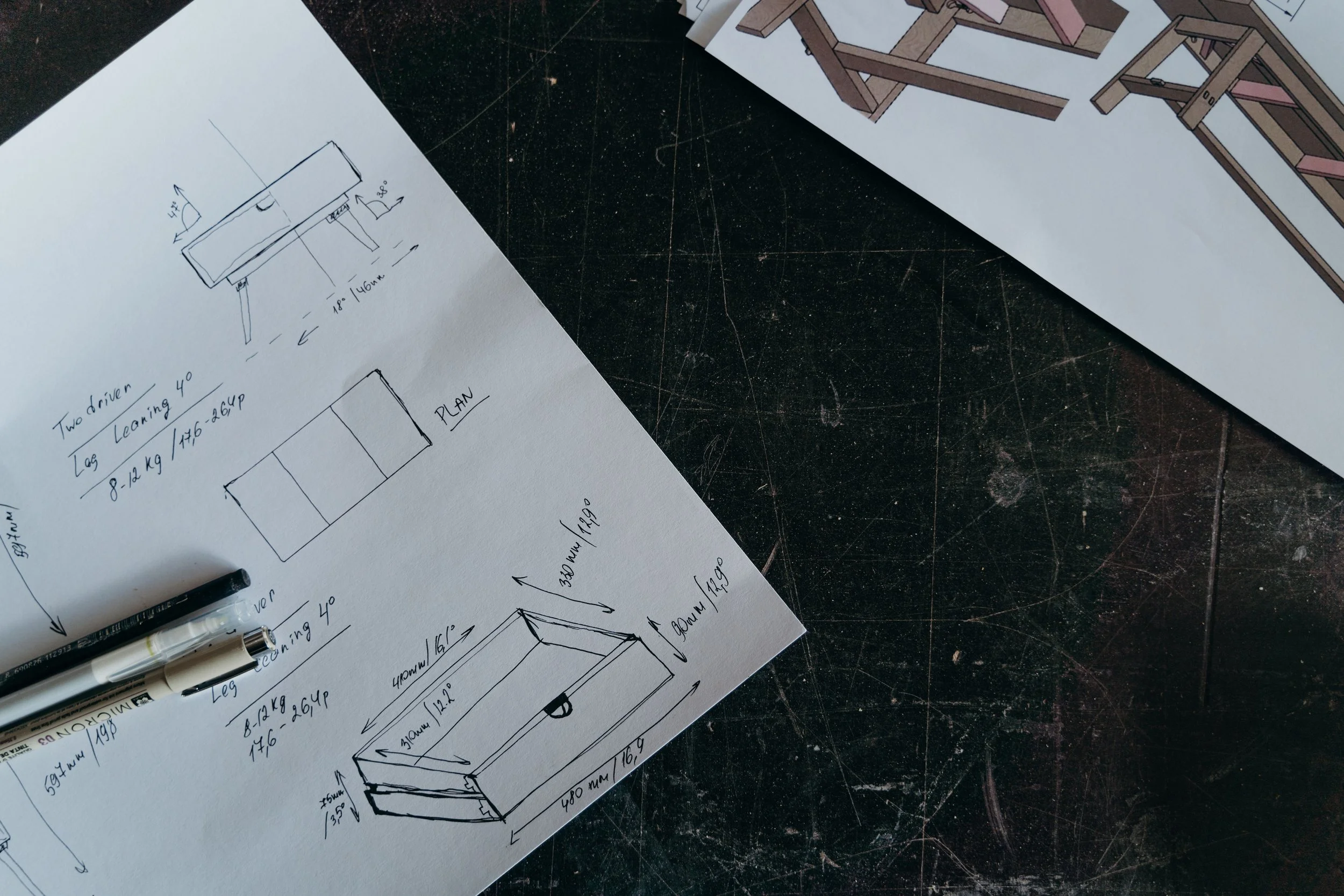
Depending on the project, sketches, technical drawings or digital models may help communicate these ideas and refine the design.
The process is collaborative, allowing practical considerations and aesthetic preferences to shape the final direction.
Choosing the Right Timber
Timber selection is one of the most exciting parts of creating custom furniture.
Unlike manufactured materials with uniform appearances, natural timber has its own grain patterns, colours and textures. These characteristics give each finished piece an individual personality.
Different timber species also offer different qualities.
American oak, for example, is often appreciated for its versatility and attractive grain. Walnut offers rich, darker tones that can create a sophisticated appearance. Australian hardwoods can introduce distinctive colours and character.
However, choosing timber isn't simply about selecting the most attractive option.
The intended use of the furniture, the design requirements, the timber's properties and the desired finish all influence which material will work best.
Marshall Wood works with responsibly sourced local and imported timber, selecting materials to suit the requirements of individual commissions.
Refining the Final Design
Before construction begins, the design needs to reach a point where the important decisions have been resolved.
This includes confirming dimensions, materials, proportions, construction details and finishes.
Taking time during this stage helps avoid unnecessary changes once production is underway.
It also gives the client greater confidence in the outcome.
Rather than purchasing furniture based on a showroom display and hoping it works at home, you're involved in developing a piece specifically intended for your space.
That's one of the biggest advantages of bespoke furniture design.
3. Craftsmanship: Bringing the Design to Life
With the design finalised and materials selected, the journey moves into the workshop.
This is where an idea becomes a physical object.
It's also where the skill, patience and attention to detail of the furniture maker become particularly important.
At Marshall Wood's Perth studio, furniture making combines considered design with hands-on craftsmanship. From preparing timber to applying the final finish, the process is guided by the aim of creating furniture that looks beautiful and performs well over time.
Preparing the Timber
Before timber can be transformed into furniture, it needs to be carefully assessed and prepared.
Natural timber is a wonderful material, but it isn't completely predictable.
Grain direction, colour variation, moisture content and natural movement all need to be considered.
A skilled furniture maker understands these characteristics and works with them rather than ignoring them.
Boards may be selected and arranged to achieve a pleasing grain pattern. Timber is then cut, shaped and prepared according to the design.
Careful preparation creates the foundation for accurate construction and a high-quality finished piece.
Precision in Every Joint
One of the clearest differences between well-made furniture and poorly constructed alternatives is often found in the details you don't immediately notice.
Joinery plays an important role in a piece's strength, stability and appearance.
Depending on the design, different construction techniques may be used to connect components securely while maintaining the intended aesthetic.
Accurate measurements and careful assembly help ensure that drawers operate smoothly, tabletops remain properly supported and individual elements fit together as intended.
For a dining table, structural stability is essential. For a cabinet, precise alignment contributes to both functionality and visual appeal.
These details may seem small, but together they make a substantial difference to the finished result.
The Art of Hand Finishing
Once construction is complete, attention turns to the surface.
Finishing is about much more than making timber look attractive.
The right finish helps protect the furniture from everyday wear while enhancing the timber's natural grain and colour.
Surfaces are carefully prepared, edges are refined and the selected finish is applied according to the requirements of the piece.
An oil finish, for instance, can bring out the warmth and texture of natural timber. Other finishing systems may be more appropriate where particular levels of protection or visual effects are required.
The choice depends on the material, intended use and desired appearance.
This stage requires patience. Rushing surface preparation or finishing can undermine the care invested in earlier stages.
When done properly, the result is furniture that feels as considered as it looks.
Why Handmade Furniture Feels Different
There's something distinctive about furniture made by a skilled craftsperson.
It might be the way the grain flows across a tabletop, the smoothness of a hand-finished edge or the balance of the overall design.
These qualities are difficult to appreciate from measurements alone.
They become apparent when you interact with the finished piece.
Handcrafted furniture also carries a connection to its maker. Knowing that someone has personally considered the materials, proportions and details adds another dimension to ownership.
Instead of being one of thousands of identical products, your furniture has been created with a particular purpose and place in mind.
4. Delivery and Installation: The Final Step in the Journey
After the planning, design development and craftsmanship, the finished furniture is finally ready to make its way to its new home.
This is an exciting stage, but it's also one that deserves careful attention.
A beautifully made piece of furniture needs to arrive safely and be positioned correctly to achieve the intended result.
Preparing for Delivery
Before delivery, the completed furniture should be checked to ensure it meets the agreed design requirements.
This may include reviewing the finish, dimensions, stability and overall appearance.
Appropriate protection and handling are also important, particularly for larger or more delicate pieces.
Solid timber furniture can be heavy, and certain designs require additional care during transportation.
Depending on the size and construction of the piece, delivery arrangements may need to account for doorways, staircases, lifts and access to the intended room.
Planning these details in advance helps make the final stage smoother.
Bringing the Furniture Into Your Space
For pieces that require on-site assembly or positioning, installation is an important part of the overall experience.
A large dining table, for example, may need its base and tabletop connected after being moved into the room. A substantial cabinet may require careful positioning and appropriate securing, depending on its design.
The exact installation requirements vary from project to project and should be discussed before delivery.
Marshall Wood's bespoke service encompasses the journey through to delivery, helping connect the initial design concept with the finished furniture in its intended setting.
Marshall Wood+1
The Moment Everything Comes Together
There's a particular satisfaction in seeing a bespoke piece of furniture in the space it was designed for.
The dimensions make sense. The timber complements the surrounding materials. The proportions feel balanced.
Something that began as an idea is now part of your everyday environment.
A dining table becomes the place where friends gather for dinner. A custom desk becomes part of a productive working day. A hallway table welcomes you home.
And over time, these pieces become connected to the memories made around them.
That's when bespoke furniture truly comes into its own.
Why the Bespoke Furniture Journey Is Worth It
Commissioning custom furniture generally involves more time and consideration than purchasing something directly from a showroom.
But that additional involvement brings meaningful benefits.
You have the opportunity to influence the design, choose materials that suit your preferences and create furniture around the dimensions of your space.
You also gain a better understanding of how the piece is made and why particular design decisions matter.
Perhaps most importantly, bespoke furniture encourages a different approach to furnishing a home.
Instead of buying something simply because it's available, you can invest in a piece that genuinely suits your needs.
Well-designed timber furniture can also offer long-term value. With appropriate care, many solid timber pieces can be maintained, repaired or refinished rather than replaced.
That makes thoughtful craftsmanship particularly appealing to people who prefer to buy fewer, better-quality items.
Experience Bespoke Furniture Craftsmanship With Marshall Wood
Creating bespoke furniture is a journey built on communication, creativity and skilled workmanship.
From the initial conversation to the final finishing touches, every stage contributes to the quality and character of the completed piece.
At Marshall Wood, this approach is at the heart of the studio's work.
Founded in 2019 by Jake Sawyer, Marshall Wood specialises in custom and small-batch timber furniture in Perth, Western Australia. The studio works with homeowners, designers and other clients to develop furniture that combines individual expression with practical, lasting design.
Whether you're imagining a custom dining table, a handcrafted coffee table, a distinctive sideboard or something entirely different, the process begins with understanding your vision.
Because the best furniture doesn't simply fill a room.
It belongs there.
Ready to bring your furniture idea to life?
Explore Marshall Wood's bespoke furniture collection or get in touch to discuss your project.
Email: jake@marshallwood.com.au
Phone: +61 421 246 449
Website: www.marshallwood.com.